
Buying a used car doesn’t have to be a leap of faith, but the check you rely on to protect you is only as good as the company and the data behind it. HPI’s guide explains what a proper vehicle history check should tell you, and how to spot one that falls short.
There is no great secret to buying a used car safely, and most of what keeps you out of trouble is a mix of research, patience, and the kind of common sense that tells you a deal which looks too good to be true usually is.
The single most useful thing you can do before handing over any money is to find out what the car went through before it reached you, which is exactly what a vehicle history check is designed to do.
The difficulty is that history checks have themselves become a crowded and confusing market, and not every report that looks the part will give you the protection you think you are paying for.
Why a history check matters

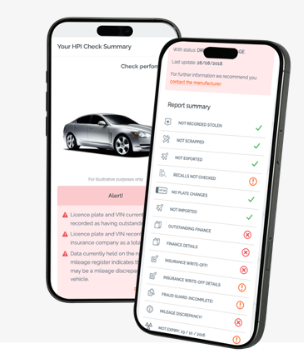
A car can look immaculate on the driveway and still carry a past that becomes your problem the moment you buy it. If there is outstanding finance against the vehicle, it may legally belong to the finance company rather than the person selling it, and you could end up losing both the car and the money you paid for it.
If it has been stolen, written off by an insurer or had its mileage wound back, there is every chance none of that will be visible during a viewing or a test drive, however carefully you look.
These aren’t rare occurrences either. Every day, HPI’s data identifies around 975 vehicles recorded as written off and 726 with a mileage discrepancy, which gives some idea of how often these problems surface in cars that are being offered for sale.
What a free check can and can’t tell you
Search for a vehicle check online, and you will find no shortage of websites offering one for free, and some of them do provide genuinely useful information. Much of it, however, comes from publicly available sources such as DVLA vehicle records and the government’s MOT history service, both of which you can look up yourself on GOV.UK at no cost.
That information is well worth having, because it will confirm the car’s make, colour, tax and MOT status, and the mileage recorded at each MOT test, which is a good starting point for spotting anything that doesn’t add up.
What it won’t tell you is whether the car has outstanding finance, because that data is held by finance companies and is only available through formal agreements with them. The same is true of the full picture on insurance write-offs and police stolen vehicle records, which is why a free check should be treated as a first look rather than the final word, and why many free services exist mainly to sell you an upgrade.
If there is outstanding finance against the vehicle, it may legally belong to the finance company rather than the person selling it. Buyers should not rely on the seller’s promise to clear the debt. Ask the finance company for written confirmation that the agreement has been settled, or arrange for the outstanding balance to be paid directly to the lender as part of the sale. Do not complete the purchase until you are satisfied that the finance has been cleared.
Why the name causes confusion
One of the quirks of the used car market is that “HPI check” has become everyday shorthand for any vehicle history check, in much the same way that people say they will “Google” something, whichever search engine they actually use. As a result, plenty of buyers search for an HPI check, click on the first result and assume that is what they have bought, when the report has no connection to HPI whatsoever.
Some of those alternative providers are perfectly reputable businesses that simply compete for your custom. Others are much harder to pin down, with no company details, no registered address, and links to terms and privacy pages that lead nowhere, and, in some cases, listings on online marketplaces and app stores that borrow the HPI name to appear more established than they really are.
HPI regularly hears from consumers who have bought one of these reports and run into trouble, from incomplete or inaccurate vehicle data to terms that quietly enrolled them in a recurring payment when they thought they were making a single purchase.

Five checks that separate a genuine history report from a lookalike
Before you pay for any vehicle history check, it is worth spending a couple of minutes on the following questions, none of which require any specialist knowledge and all of which could save you a great deal of money and hassle further down the line.
1. Can you tell who you are buying from?
A legitimate provider will make it easy to find its full company name, a registered address and a UK company registration number, which you can check for free on the Companies House website in a matter of seconds.
The links at the bottom of the page to its terms and conditions and privacy policy should open properly and actually say something meaningful. If you can’t work out who runs the site, you will have nobody to turn to if the report turns out to be wrong.
2. Does it say where its data comes from?
A history check is only ever as reliable as the information behind it, so a genuine provider should be open about its sources. For a comprehensive check, those will include finance companies, insurers, the police and the DVLA; the HPI Check, for example, draws on data from 45 UK police forces alongside finance and insurance records.
Vague references to “trusted partners” or “multiple databases” with no names attached should make you cautious, because a provider with good data generally has every reason to tell you where it came from.
3. Is it clear exactly what you are paying for?
Read the price and the terms carefully before you enter any payment details, and look specifically for anything that hints at a trial, a membership or a recurring charge.
A history check should normally be a single transaction for a single vehicle, and if you are being asked to sign up to anything ongoing, that should be stated plainly rather than tucked away in the small print or hidden behind a box that has already been ticked on your behalf.
4. Is the report backed by a guarantee?
Some providers stand behind the accuracy of their data with a financial guarantee, which means that if the information turns out to be wrong and you lose out as a result, you can be compensated. The HPI Check comes with a data guarantee of up to £30,000, and if a report offers no guarantee of any kind, it is worth asking yourself how much confidence its provider really has in it.
5. Are you on the site you think you are on?
If you want an HPI Check specifically, go directly to www.hpi.co.uk rather than clicking on a search advert or a link in a marketplace listing, and check the web address carefully before you pay, because names that look similar at a glance are an easy way to end up somewhere else entirely.
The same applies when you read reviews, since complaints about lookalike services are sometimes posted against the wrong company, so make sure any review you rely on is genuinely about the business you are considering.
Beyond the report
Even the most thorough history check works best alongside the usual precautions, all of which apply whatever the car and wherever you buy it.
Ask to see the V5C registration document and check that the name and address on it match the seller and the place where you are viewing the car. Compare the vehicle identification number (VIN) on the document with the one on the car itself, which is usually visible at the base of the windscreen and stamped on a plate inside the door frame or under the bonnet.

Be wary of sellers who would rather meet in a car park or at the roadside than at a home or business address, and of anyone pushing you for a quick decision or a bank transfer before you have had a proper look at the car. Check the service history and MOT records against the mileage shown on the dashboard, and take a test drive that is long enough to tell you something useful about how the car behaves.
Finally, run your history check as close to the point of purchase as you can, ideally on the day you buy, because a car’s status can change and a report that was clean a fortnight ago may not be clean today.
What to do if something goes wrong
If you have bought a report that didn’t deliver what it promised, or you find yourself paying for something you never agreed to, contact the provider first and keep a record of what you sent and when you sent it.
If that doesn’t resolve matters, your card provider may be able to help you recover the payment through a chargeback, and the Citizens Advice consumer helpline can explain your options and pass concerns on to Trading Standards. Misleading websites, listings and adverts can also be reported to the platform that hosts them.
HPI’s own customer services team regularly helps people who get in touch after problems elsewhere, even when they have never bought an HPI Check, and those conversations are a large part of why HPI has called for clearer standards across the industry and raised its concerns with the Competition and Markets Authority.
Conclusion
For most people, buying a used car is a straightforward and rewarding experience, and a proper history check is one of the cheapest ways of keeping it that way. A genuine report gives you the facts about a car’s past from the organisations that actually hold them, from a company you can identify and hold to account, at a price you understand before you pay.
Start your next used car purchase with an HPI Check and make sure you are armed with all the information you need:
https://www.home.hpicheck.com/